Best MagSafe Power Banks for iPhone: 5K, 10K and the First 25W Pack
A magnetic battery is the one accessory where the spec sheet lies by omission. Six packs compared on real wireless wattage, thickness, heat, and how many reviews mention them dying.
This post contains Amazon affiliate links. As an Amazon Associate we earn from qualifying purchases, at no extra cost to you.
At a glance
| Pick | Price | Rating | Buy |
|---|---|---|---|
| Anker MagGo Power Bank 10K (Qi2, 15W) | $49.99 | 4.4/59,800 reviews | Check price for Anker MagGo Power Bank 10K (Qi2, 15W) on Amazon |
| Anker Nano Magnetic Power Bank 5K (Qi2, 15W) | $48.98 | 4.2/54,367 reviews | Check price for Anker Nano Magnetic Power Bank 5K (Qi2, 15W) on Amazon |
| TORRAS MiniMag 10,000mAh (15W wireless, 22.5W wired)Most reviewed | $41.37 | 4.3/516,507 reviews | Check price for TORRAS MiniMag 10,000mAh (15W wireless, 22.5W wired) on Amazon |
| Anker Zolo Magnetic Power Bank 10K (7.5W wireless, 30W wired)Highest rated | $49.99 | 4.5/54,873 reviews | Check price for Anker Zolo Magnetic Power Bank 10K (7.5W wireless, 30W wired) on Amazon |
| podoru Magnetic Power Bank 5,000mAh (15W)Lowest price | $21.99 | 4.2/513,083 reviews | Check price for podoru Magnetic Power Bank 5,000mAh (15W) on Amazon |
| Anker MagGo 2 Pro 10K (Qi2.2, 25W) | $109.99 | 4.0/5189 reviews | Check price for Anker MagGo 2 Pro 10K (Qi2.2, 25W) on Amazon |
Prices and ratings are the reading taken when this guide was last updated. Check the listing for the current price.
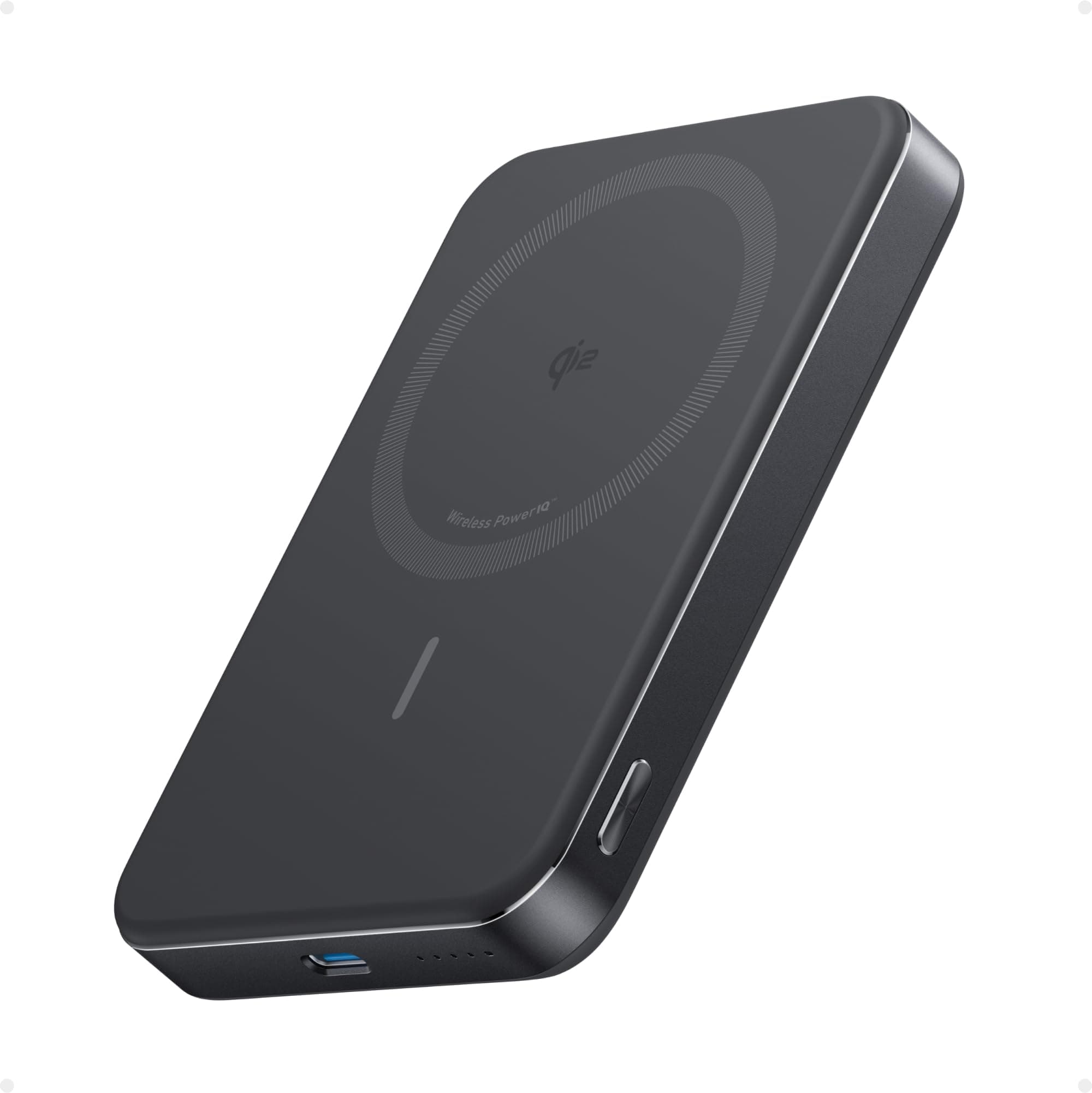
Anker MagGo Power Bank 10K (Qi2, 15W)
Qi2-certified 15W wireless plus a 30W USB-C port
$49.99 · 4.4/5 · 9,800 reviews
A magnetic power bank is the accessory where the spec sheet lies by omission. Every listing says "MagSafe compatible" and quotes a capacity in mAh. Almost none of them lead with the two numbers that decide whether the thing is useful: how many watts it actually pushes wirelessly, and how much of that capacity reaches your phone.
Those two numbers vary more than the prices do. The six packs below range from 7.5W to 25W wireless, which is a three-times difference in how long your phone sits on the battery. And a 5,000mAh pack does not deliver 5,000mAh to an iPhone: wireless transfer loses roughly a third to heat and voltage conversion, so expect something like 60 to 70% of one charge from a 5K pack and a bit more than one full charge from a 10K.
We compared what is actually selling, read the review themes Amazon extracts for each listing, and kept six that each solve a different problem.
What we looked for
- Real wireless wattage. Qi2 means a certified 15W. Qi2.2 means up to 25W, which the iPhone 17, 17 Pro and 17 Pro Max, the 18 Pro models, the Duo and the two larger iPhone 16 models can use in full. "Up to 15W" without a certification is a claim, not a standard.
- Thickness and weight on the phone. A pack you carry in a pocket is different from one that lives on the back of the phone. Over about 0.6 inches, most people stop snapping it on.
- Heat. Wireless charging makes heat, and a hot battery pack slows itself down. Every pack here has heat complaints; the question is how many, and whether the maker did anything about it.
- Durability signals. Amazon groups review complaints by theme. A pack with hundreds of "stopped working after a few months" mentions is telling you something a star rating hides.
Qi2, Qi2.2 and "MagSafe compatible" decide the speed
Apple's MagSafe and the open Qi2 standard both put a magnet ring around the coil so the pack aligns itself. Qi2 is certified at 15W. The newer Qi2.2 tier goes to 25W, and Apple's iPhone 17, 17 Pro and 18 Pro models accept all of it, as do the iPhone 16 Plus and 16 Pro Max. Apple lists the iPhone 16 and 16 Pro at 22.5W and the iPhone Air at 20W. The iPhone 17e and the iPhone 15 and earlier stay at 15W no matter what pack you buy, so paying for 25W only makes sense on a phone that can use it.
"MagSafe compatible" on its own means the magnets are there. It says nothing about wattage. Two of our picks make exactly this point: the Anker Zolo has strong magnets and a 4.5-star rating, and charges wirelessly at 7.5W, half of Qi2. It is still a good buy, for the reasons below, but you should know that going in.
If the labels still blur together, Qi2 vs MagSafe covers what each one certifies and how to read a charger listing.
One more compatibility note. The iPhone 16e has no magnets at all, so none of these packs will hold on it without a magnetic case or a stick-on ring. The 17e does have the magnet array and charges at 15W.
The iPhone Air has the full array as well and takes up to 20W wirelessly. Does the iPhone Air have MagSafe covers that phone, including what Apple says about its own battery pack.
5,000 or 10,000mAh
The 5K packs here are 0.3 to 0.55 inches thick and weigh about as much as a deck of cards. They are the ones people actually leave on the phone through an afternoon. Wirelessly, they add roughly two-thirds of a charge to a standard iPhone and less to a Pro Max.
The 10K packs are 0.58 inches and up, and heavier. Two of the three 10K picks have "weight" as a mixed or negative review theme, and the Zolo has reviewers saying it slides off under its own mass. A 10K pack is better carried in a bag and plugged in by cable when you need speed, which is why we weight the wired output more heavily for them.
Heat and durability, by the numbers
Amazon's review summaries give a mention count per theme, which lets you compare packs directly instead of reading anecdotes.
Heat is a negative theme on every pack. The MagGo 10K has 238 heat mentions out of about 9,800 reviews, the podoru 363 out of 13,000, the Nano 5K 302 out of 4,400. Only the MagGo 2 Pro, which has a fan, has heat as a positive theme instead.
Durability separates the field more sharply. The podoru lists durability as a negative theme with 528 mentions about units dying or power-cycling. None of the Anker packs has durability as a negative theme at all. That gap, not the star rating, is why the podoru is a budget pick with a caveat rather than our top pick.
Our picks
Six packs, in the order we would recommend them to someone who has not told us their budget. The Anker MagGo 10K is the default. The Nano 5K is for people who want the thinnest certified pack. The TORRAS is the value 10K with the biggest review pool. The Zolo is a cable-first pack that happens to have magnets. The podoru is the sub-$25 option. The MagGo 2 Pro is for iPhone 17 and 18 Pro owners who want the only 25W pack on the list and accept that it is new.
- +Qi2-certified 15W wireless plus a 30W USB-C port
- +Magnets hold through normal use, 216 reviews single them out
- +0.58 in thick for a 10,000mAh pack
- -Gets noticeably hot while charging wirelessly
- -Charging speed is the most mixed review theme
Price last checked Oct 6, 2026. Amazon changes prices often — the listing is the authority.
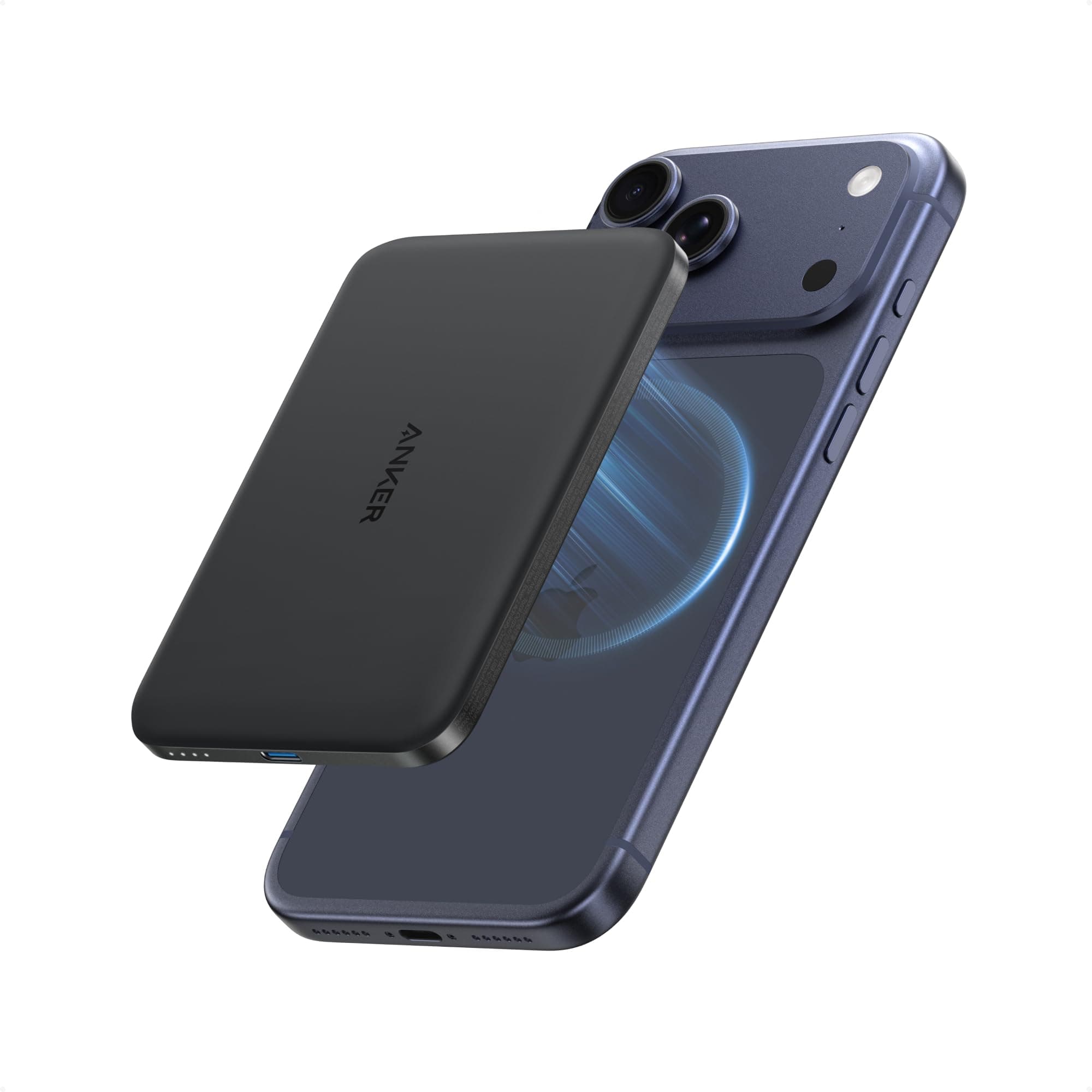
- +0.3 in thin, roughly credit-card footprint
- +Qi2-certified 15W, 20W USB-C output
- +Graphene cooling and temperature protection
- -5,000mAh gives well under one full charge wirelessly
- -Costs almost as much as the 10,000mAh MagGo
Price last checked Oct 6, 2026. Amazon changes prices often — the listing is the authority.
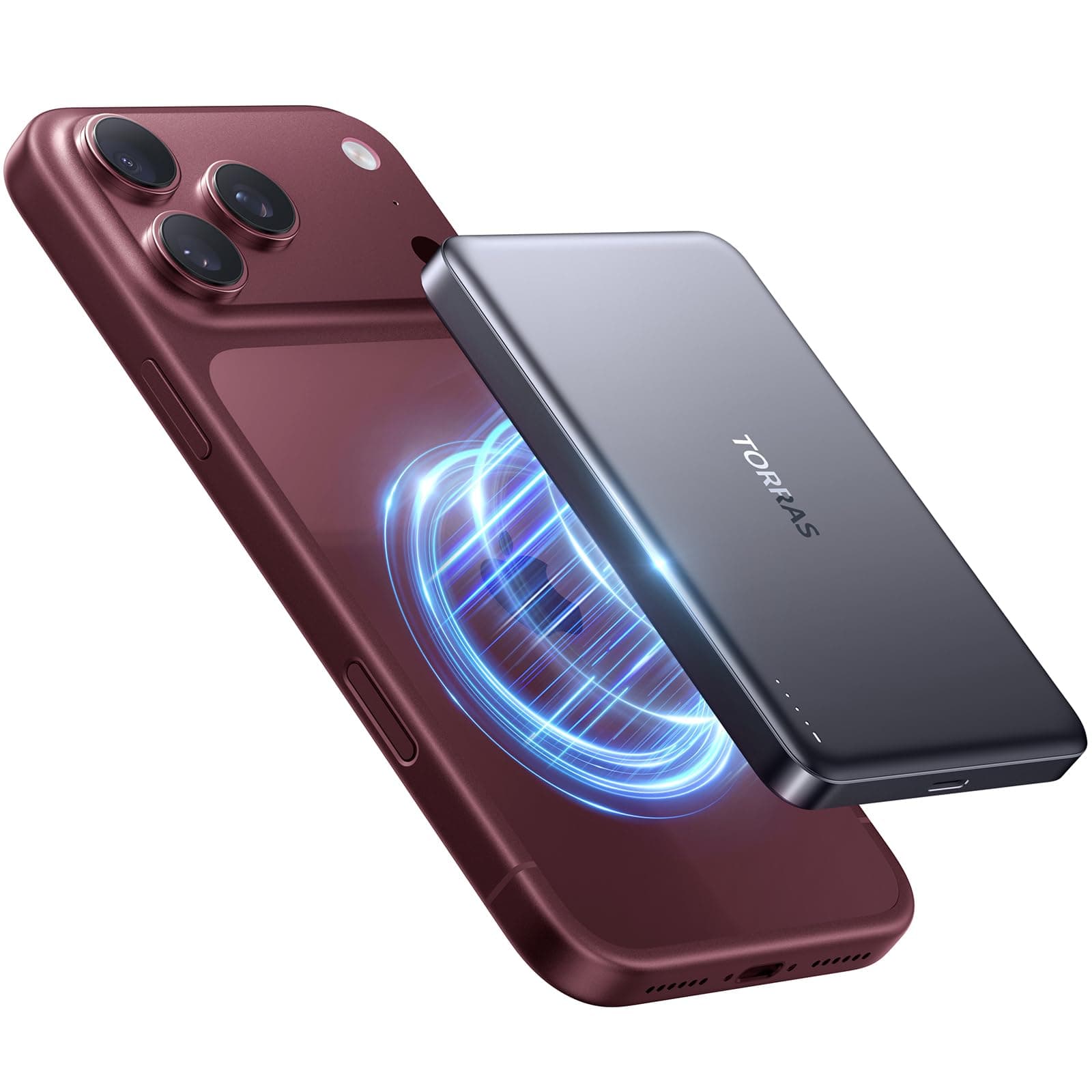
- +Largest review pool in the category at 4.3 stars
- +22.5W wired output for when wireless is too slow
- +Strong magnet, stays put while walking
- -No Qi2 certification listed, wireless tops out at 15W
- -Weight and heat are both split themes in reviews
Price last checked Oct 6, 2026. Amazon changes prices often — the listing is the authority.
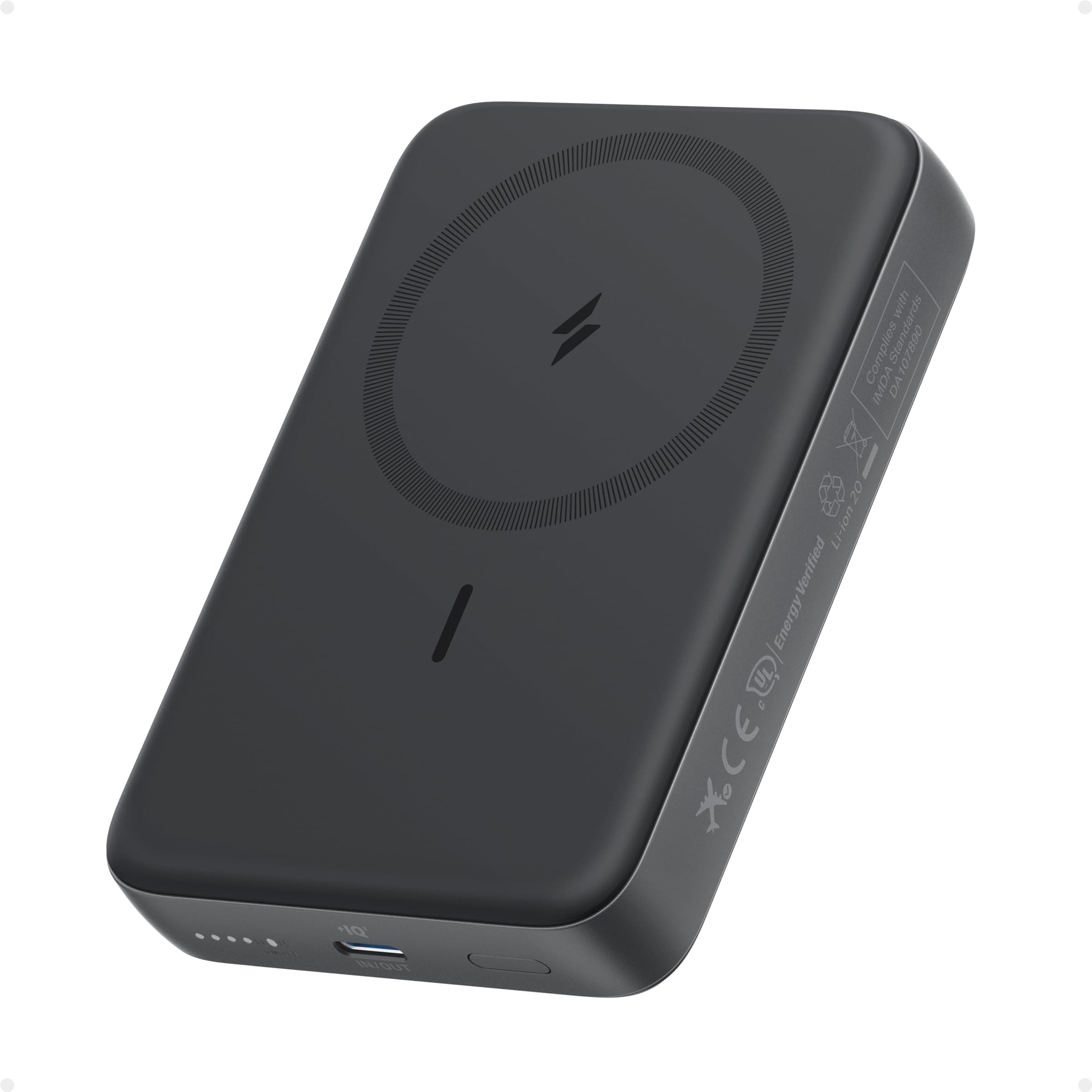
- +Highest rating of the six at 4.5 stars
- +30W wired output, the fastest cable charge here
- +Soft silicone face does not scratch a bare phone
- -Wireless is capped at 7.5W, half of Qi2
- -Heavy enough that some reviewers say it slides off
Price last checked Oct 6, 2026. Amazon changes prices often — the listing is the authority.
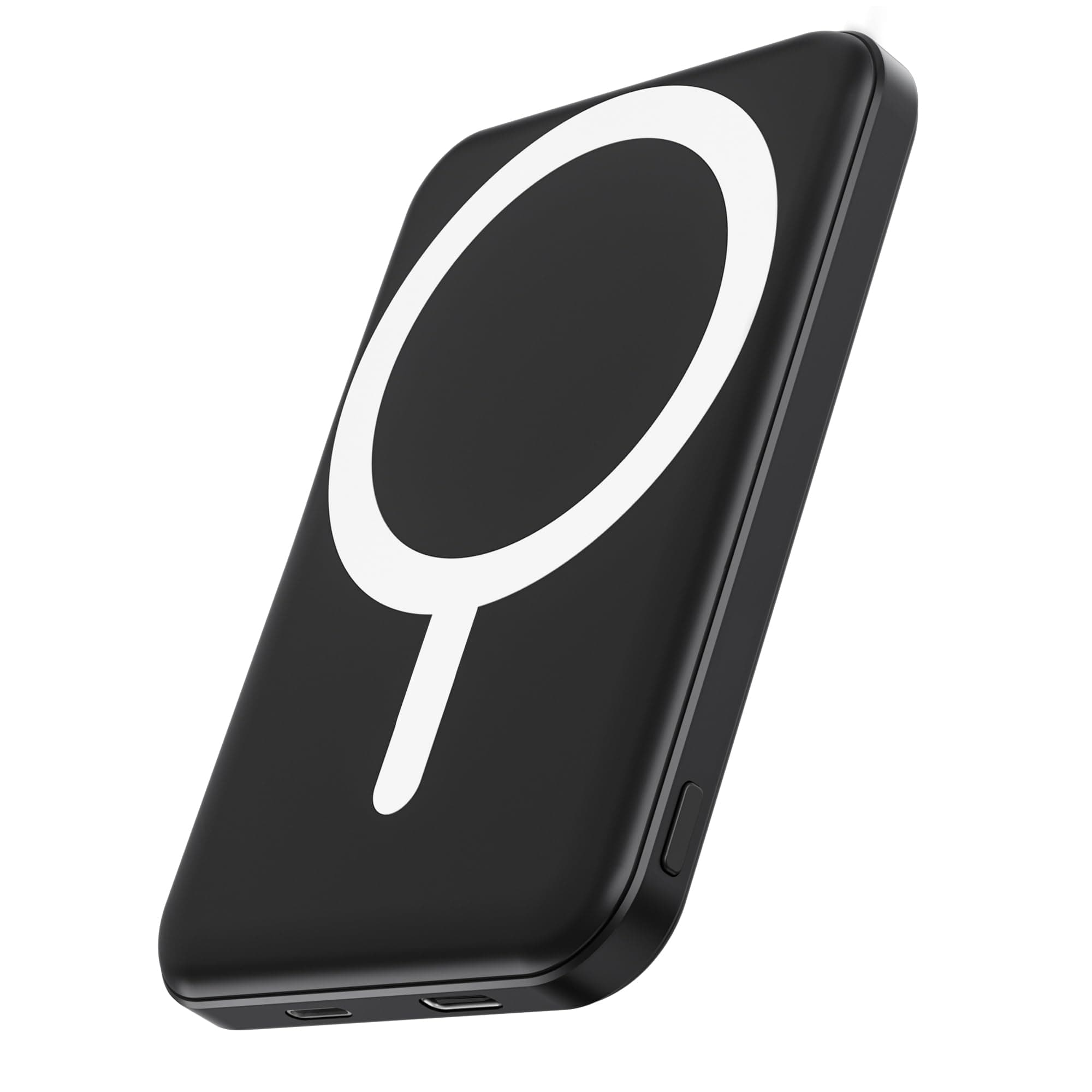
- +Under $25 and a top-3 Amazon bestseller in power banks
- +Up to 15W wireless, 20W USB-C, 0.55 in thick
- +Fits the width of a standard iPhone without covering the camera
- -Durability is the standout complaint: units dying after months
- -Runs hot, 363 reviews mention it
Price last checked Oct 6, 2026. Amazon changes prices often — the listing is the authority.
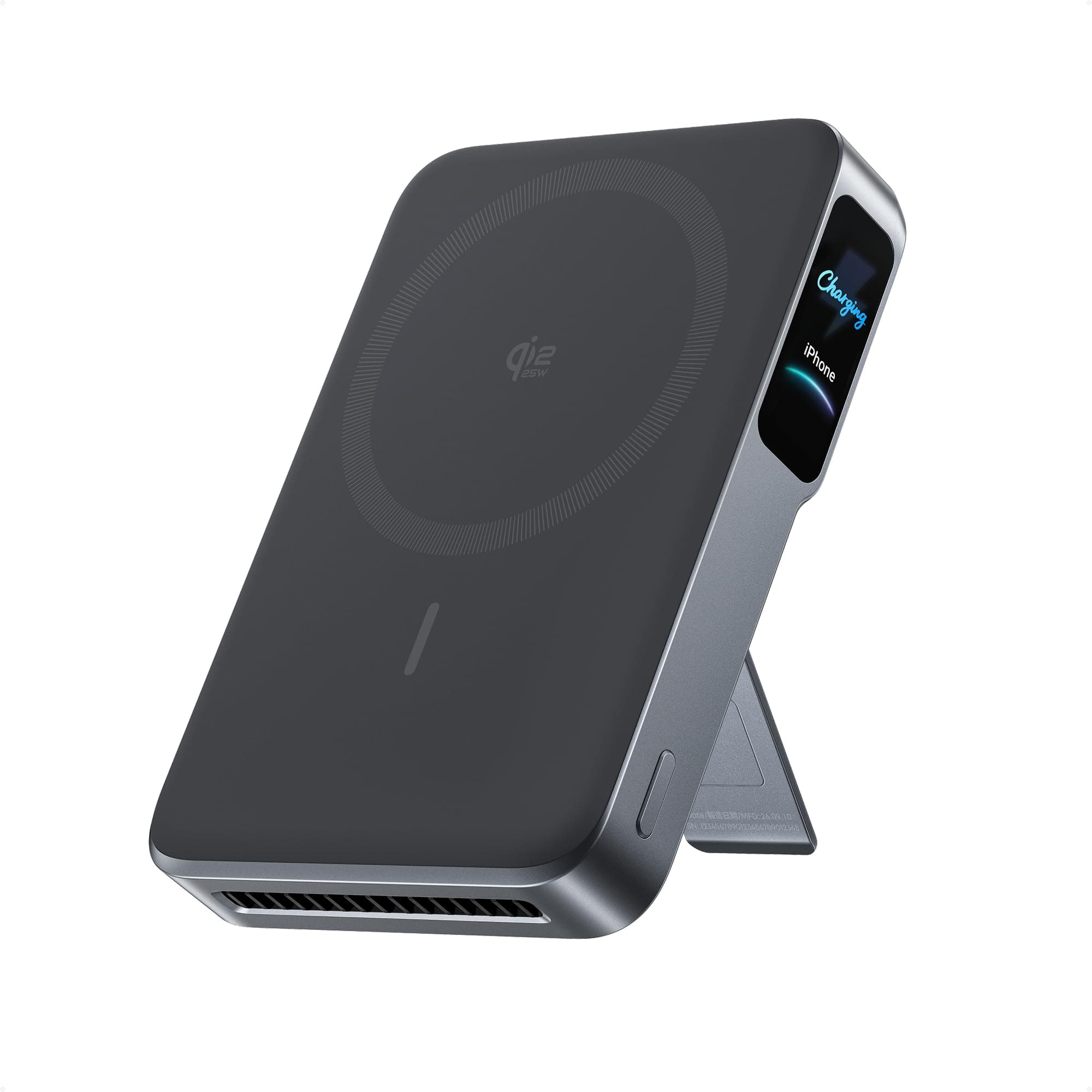
- +Qi2.2 25W wireless, the only pack here that matches the iPhone 17 and 18 Pro ceiling
- +Built-in fan keeps the phone under body temperature
- +Recharges to 80% in 52 minutes over 45W USB-C, has a display and a stand
- -Only 189 reviews so far and a 4.0 average
- -More than double the price of the 15W MagGo
Price last checked Oct 6, 2026. Amazon changes prices often — the listing is the authority.
Frequently asked questions
Will a MagSafe power bank work through a case? Only through a case with its own magnet ring. A plain silicone or TPU case adds a gap that weakens the hold and slows charging, and a thick rugged case can stop the pack attaching at all. If your case has no ring, a stick-on magnet ring restores the hold.
How many full charges does a 10,000mAh pack give an iPhone? About one full charge wirelessly on a Pro Max and a little more on a standard iPhone. Wireless transfer loses roughly a third of the capacity to heat. By cable the same pack gives closer to one and a half charges.
Is a Qi2.2 25W power bank worth it? Only if your iPhone can use it. The iPhone 17, 17 Pro, 17 Pro Max, Duo, 18 Pro, 18 Pro Max, 16 Plus and 16 Pro Max accept 25W, the iPhone 16 and 16 Pro reach 22.5W, and the Air tops out at 20W. An iPhone 17e, or an iPhone 15 or earlier, charges at 15W from any of these packs, so the cheaper Qi2 models are the better buy for those phones.
Can I take these on a plane? Yes. All six are under the 100Wh limit airlines use, and Anker states its packs are flight-approved in the US. Keep them in carry-on, not checked baggage, which is a rule for every lithium battery.
Why does my magnetic power bank get hot? Wireless charging wastes energy as heat on both the pack and the phone, and the magnets keep the two warm surfaces pressed together. Most packs slow their output when they warm up. Charging by cable, or taking the phone case off, keeps both cooler.
Related guides
Does the iPhone Air Have MagSafe? Yes, at 20W Instead of 25W
Apple did not drop the magnets to make the Air thin. It has the full array, and the one thing that changed is the ceiling: 20W where the iPhone 17 gets 25W.
Read the answer→Qi2 vs MagSafe: What Is the Difference, and Where 25W Fits
MagSafe is Apple's name, Qi2 is the open standard built from it, and neither is the label that catches people out. That one is "MagSafe compatible", and it usually means 7.5W.
Read the answer→Will iPhone 17 Cases Fit the iPhone 18 Pro?
They are within two hundredths of an inch of each other in height and width, which is exactly why people try it. Here is what Apple's own numbers say and what goes wrong.
Read the answer→Does the iPhone 17e Have MagSafe? Yes, Unlike the 16e
Apple quietly fixed the biggest accessory complaint about its budget iPhone. The 17e has a real magnet array, which changes what you need to buy alongside it.
Read the answer→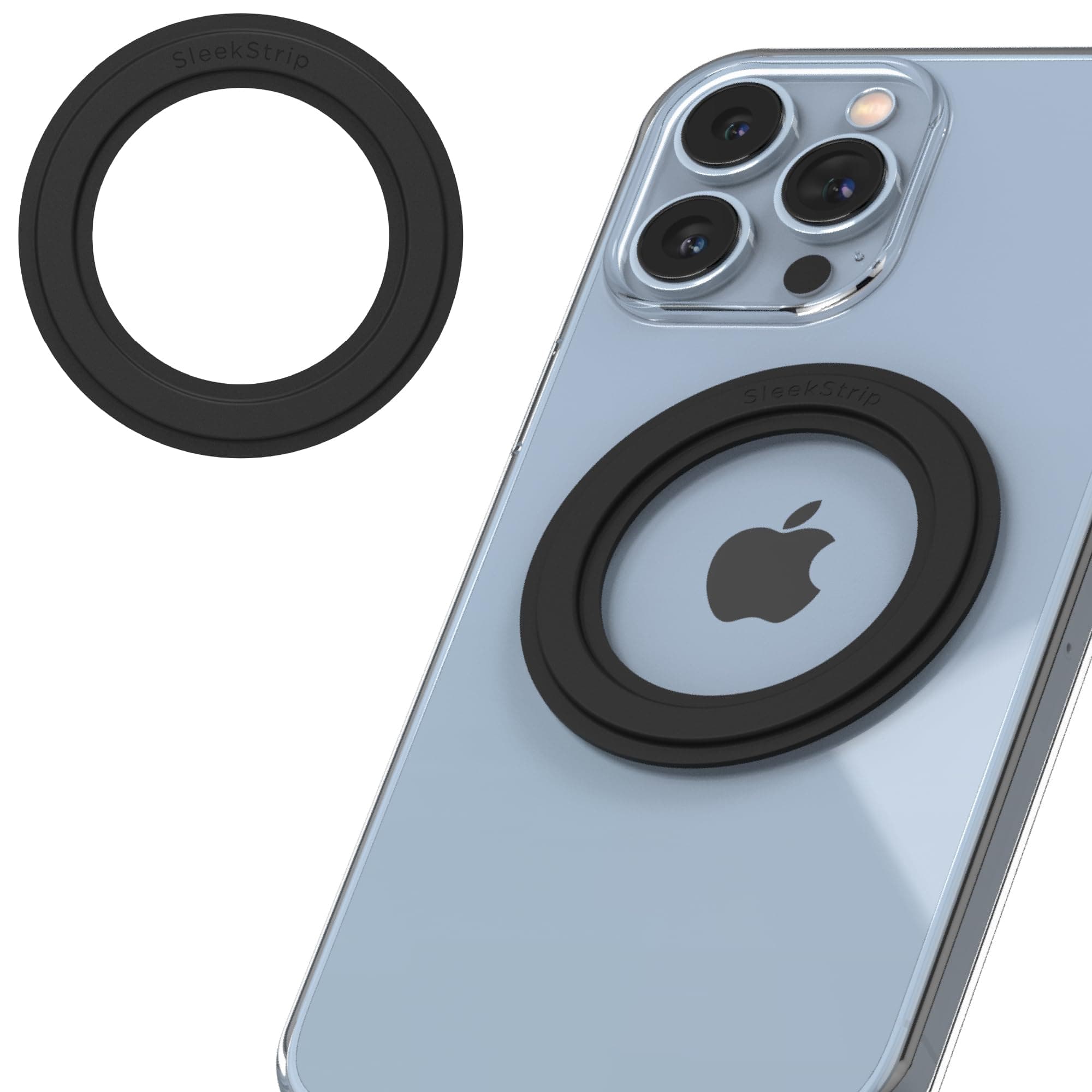 Review
Best MagSafe Magnet Rings: Add Real Magnets to Any Case
A few dollars of adhesive magnets turns a case with no MagSafe into one that holds wallets, mounts and chargers. The catch is that these fail in two predictable ways.
Read the review→Does the iPhone 16e Have MagSafe? What Works and What Doesn't
The iPhone 16e charges wirelessly but has no magnets inside it. That one omission changes which accessories work, which hold weakly, and which do nothing at all.
Read the answer→