Qi2 vs MagSafe: What Is the Difference, and Where 25W Fits
MagSafe is Apple's name, Qi2 is the open standard built from it, and neither is the label that catches people out. That one is "MagSafe compatible", and it usually means 7.5W.
This post contains Amazon affiliate links. As an Amazon Associate we earn from qualifying purchases, at no extra cost to you.
They are the same magnetic charging idea under two names. MagSafe is Apple's brand for it, and Qi2 is the open standard the Wireless Power Consortium built from it. For an iPhone owner the practical difference between the two is small. The label that costs people money is a third one: "MagSafe compatible".
Where each name comes from
MagSafe arrived with the iPhone 12. A ring of magnets around the charging coil pulls a charger into exactly the right spot, which is what lets wireless charging run faster without wasting most of the extra power as heat.
Qi is the wireless charging standard run by the Wireless Power Consortium, the industry body most phone and charger makers belong to. Its second generation, Qi2, added a magnet ring. The consortium says that part of the standard, the Magnetic Power Profile, is based on MagSafe technology that Apple contributed, and the iPhone 15 line was among the first phones certified for it.
So Qi2 is not a rival to MagSafe. It is MagSafe's magnets and alignment written into a standard that any manufacturer can certify against.
The three speeds
- Qi, up to 7.5W on an iPhone. The original standard. No magnets are required, so the phone sits wherever you put it. Apple lists Qi charging at up to 7.5W for the iPhone 16e, the one recent iPhone limited to it.
- Qi2, 15W. A magnet ring and a certified 15W.
- Qi2 25W, usually written Qi2.2 on listings. The consortium launched this tier in July 2025. It describes it as nearly 70 percent more power than Qi2, enough to take a phone from empty to half in about 30 minutes.
MagSafe is not a fourth speed. Apple's own chargers run at whichever of the top two tiers the phone supports.
Which iPhone gets which speed
These figures come from Apple's specification pages and its MagSafe Charger support article.
- 25W: iPhone 17, 17 Pro, 17 Pro Max, 18 Pro, 18 Pro Max and iPhone Duo, plus the iPhone 16 Plus and 16 Pro Max. Apple says this needs a 30W or larger power adapter.
- 22.5W peak: iPhone 16 and 16 Pro, according to the support article.
- 20W: iPhone Air, also with a 30W or larger adapter.
- 15W: iPhone 17e, and the iPhone 15 and earlier MagSafe models, with a 20W or larger adapter.
- 12W: iPhone 12 mini and 13 mini.
- 7.5W with no magnets: iPhone 16e, which has Qi charging only.
On the spec pages for the iPhone 17 and the Air, Apple lists the same top figure for Qi2 as it does for MagSafe. A certified third-party charger is therefore not a step down from Apple's own puck, as long as it is certified for the tier your phone can use.
What "MagSafe compatible" actually promises
Magnets, and nothing else.
The phrase is not a certification. It tells you the accessory will stick to the back of the phone. It says nothing about what the coil underneath can do, and on cheap chargers that coil is often plain Qi, which means 7.5W on an iPhone.
This shows up in every charging guide we have written. In the magnetic power bank guide, one well-rated pack has strong magnets and charges wirelessly at 7.5W. The car charger guide found the same split among vent mounts that look identical in photos.
Qi2 is different because it is policed. The consortium states that only certified products may display the Qi or Qi2 logo. "Up to 15W" in a title with no certification named anywhere is a seller's claim.
How to read a charger listing
- Find the certification by name. "Qi2 certified" or "Qi2 25W" is a standard. "MagSafe compatible", "magnetic wireless" and "for MagSafe" are descriptions.
- Find the wireless wattage for iPhone. Some listings lead with a wired USB-C figure, or with a wattage that applies to other phones. The number that matters is the wireless output to an iPhone.
- Match the tier to your phone. A 25W charger only pays for itself on the phones in the top rows above. On a 17e or an iPhone 15 it runs at 15W, and a cheaper Qi2 charger does the same job.
- Check what powers it. The 25W and 20W figures assume a 30W adapter. Many pads, stands and 3-in-1 stations do not include one, and a weaker adapter quietly caps the whole thing.
- Think about your case. A thick case with no magnet ring puts distance between the coils, which costs speed and hold. The reasons are in why MagSafe accessories fall off, and a stick-on magnet ring is the cheap fix. Do you need a MagSafe case covers when each option is enough.
Frequently asked questions
Is Qi2 the same as MagSafe? Close to it. Qi2 is the open standard, and the Wireless Power Consortium says its magnetic profile is based on MagSafe technology contributed by Apple. MagSafe is Apple's brand name for the same magnet ring and alignment on its own products.
Will a Qi2 charger charge my iPhone as fast as Apple's MagSafe Charger? If it is certified for the tier your phone supports, yes. Apple's spec pages list the same top wattage for Qi2 as for MagSafe on the iPhone 17 and the iPhone Air. A 15W Qi2 charger on a 25W phone will run at 15W.
What is Qi2.2? It is the name most listings use for the 25W tier of Qi2, which the Wireless Power Consortium launched in July 2025 and calls Qi2 25W. It only runs at full speed on phones that accept 25W and with a 30W or larger adapter.
Does MagSafe compatible mean fast charging? No. It means the accessory has magnets that attach to the phone. Many chargers sold with that wording are plain Qi underneath and charge an iPhone at up to 7.5W.
Do I need a 30W adapter for wireless charging? For the 25W and 20W rates, yes, according to Apple. The 15W rate needs a 20W or larger adapter. A smaller adapter still charges the phone, only more slowly.
Can an iPhone 16e use a Qi2 charger? It will charge, at the Qi rate of up to 7.5W that Apple lists for it. It has no magnets, so the charger will not snap into place unless the phone is in a case with a magnet ring.
Related guides
Does the iPhone Air Have MagSafe? Yes, at 20W Instead of 25W
Apple did not drop the magnets to make the Air thin. It has the full array, and the one thing that changed is the ceiling: 20W where the iPhone 17 gets 25W.
Read the answer→Do You Need a MagSafe Case for MagSafe to Work?
For charging, usually not. For holding a wallet or a mount, it depends on how thick the case is. Those are two different problems, and a normal case fails them at different points.
Read the answer→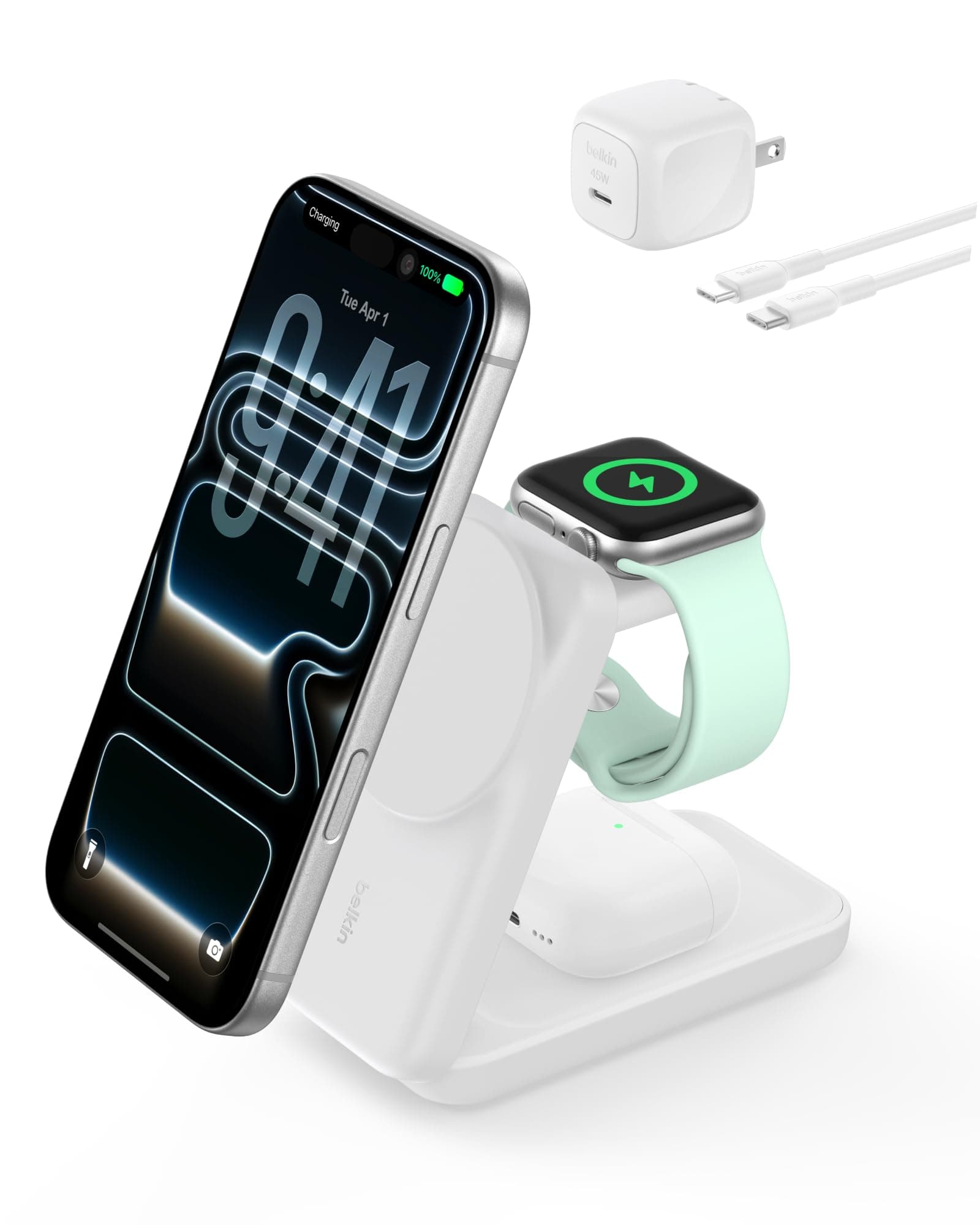 Review
Best MagSafe 3-in-1 Charging Stations for iPhone, Apple Watch and AirPods
Three devices, one plug. The catch is the Apple Watch pad: most cheap stations trickle it for hours. Six stations compared on 25W Qi2.2, watch certification, and what folds for travel.
Read the review→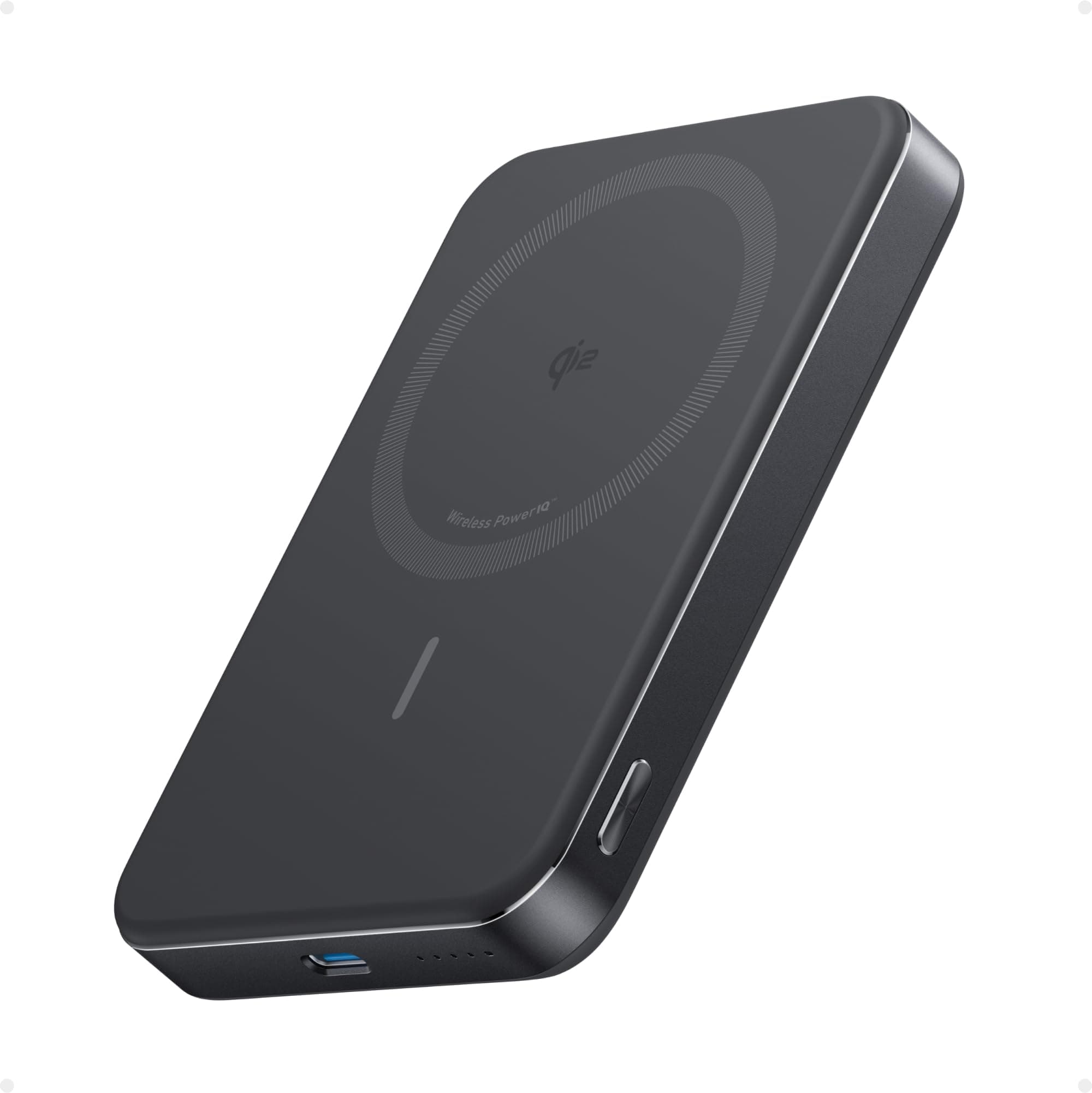 Review
Best MagSafe Power Banks for iPhone: 5K, 10K and the First 25W Pack
A magnetic battery is the one accessory where the spec sheet lies by omission. Six packs compared on real wireless wattage, thickness, heat, and how many reviews mention them dying.
Read the review→Does the iPhone Duo Have MagSafe? Yes, With One Open Question
Apple's foldable has a full magnet array and 25W MagSafe charging. What Apple has not said is which half the magnets sit in, and on a phone that opens, that matters.
Read the answer→Does the iPhone 17e Have MagSafe? Yes, Unlike the 16e
Apple quietly fixed the biggest accessory complaint about its budget iPhone. The 17e has a real magnet array, which changes what you need to buy alongside it.
Read the answer→