Why Your MagSafe Accessories Keep Falling Off
A wallet that slides off in your bag or a car mount that lets go on a speed bump is almost never a weak magnet. It is usually distance, the wrong kind of force, or a case doing quiet damage.
This post contains Amazon affiliate links. As an Amazon Associate we earn from qualifying purchases, at no extra cost to you.
A MagSafe accessory that lets go is annoying in proportion to what it was holding. A wallet leaves in a bag and you notice at a till. A car mount lets go on a speed bump and your phone ends up in the footwell while you are navigating.
People reach for the same conclusion every time: the magnet is too weak, buy a stronger one. That is usually wrong, and buying a stronger accessory usually does not fix it. There are three real causes, and they have different fixes.
Cause one: distance
Magnetic force falls off extremely fast with distance. This is not a gentle curve. Doubling the gap between two magnets cuts the force between them to a small fraction of what it was.
Everything you put between the phone and the accessory counts as gap. A case is the big one. A one millimetre slim case costs you some holding force. A two or three millimetre rugged case costs you most of it. A screen protector on the back, a stick-on ring stacked on a case, a decorative skin, all of it adds up.
This is why the same wallet feels immovable on a bare phone and unreliable through a case, and why people conclude the wallet is defective when nothing about it changed.
The fix is not a stronger wallet. It is a case with its own magnet array built in. Those cases put magnets inside the case, close to the phone's own ring, so the accessory attaches to the case's magnets at full strength rather than reaching through the case to the phone's. Our rugged case guide flags which protective cases include a real array, because thickness and magnetism pull in opposite directions and you have to choose deliberately.
Cause two: the wrong kind of force
Accessory listings advertise pull force, measured by hanging a weight straight down off the magnet. That number is close to irrelevant, because almost nothing gets pulled straight off a phone.
What actually removes accessories is shear force: sliding sideways. The lip of a pocket catches a wallet and drags it off. A bag strap snags a grip. A pothole pushes a car mount sideways rather than straight out.
Resistance to sliding depends on friction as much as magnetism. A wallet with a soft leather or silicone back grips the phone's surface and resists sliding. A hard glossy plastic wallet with a nominally stronger magnet slides more easily, because the two smooth surfaces have nothing to hold onto each other with.
The practical test takes ten seconds and is worth running inside the return window. Attach the accessory, then push it sideways with a thumb rather than pulling it away from the phone. If it slides easily in that direction, it will eventually leave on its own regardless of what the listing claims. Our MagSafe wallet guide goes into what else fails on wallets specifically.
Cause three: a partial magnet ring
Apple's array is a full circle of magnets. A well-made accessory reproduces that circle and holds evenly all the way around.
Cheaper accessories use a short arc of magnets instead, or a handful of individual magnets spaced around a plastic disc. These hold strongly at one edge and weakly at the opposite one. The failure mode is distinctive: the accessory does not fall off cleanly, it rotates first. One edge lifts, it pivots, and then it goes.
If your wallet or grip twists before it detaches, that is a partial ring, and no amount of careful handling will fix it. Nothing works except replacing it.
Diagnosing your own problem
Work through it in this order.
Take the case off and try the accessory on the bare phone. If it now holds firmly, your problem is distance, and the answer is a thinner case or a case with a magnet array.
If it holds on the bare phone but slides when pushed sideways, your problem is friction and surface, and the answer is a different accessory with a grippier back.
If it rotates before letting go on the bare phone, your problem is a partial magnet ring, and the accessory is simply not well made.
If nothing holds on the bare phone at all, check whether your phone has magnets in the first place. The iPhone 16e does not, which surprises a lot of people. We cover that in does the iPhone 16e have MagSafe.
Things that are not the cause
Magnets do not wear out in normal use. A neodymium magnet loses a negligible fraction of its strength over years at room temperature, so an accessory that held last month and does not hold now has changed in some other way. Usually you changed the case.
Heat does weaken magnets, but only at temperatures well beyond what a phone in a pocket reaches. A car dashboard in direct summer sun gets closer than anything else in normal life, which is one more reason a vent mount in moving air is a better idea than a windscreen mount in the sun. Our car charger guide covers the heat problem in more detail.
Dust and lint between the surfaces cost you a fraction of a millimetre, which is not nothing given how steep the distance curve is. It is worth wiping both faces occasionally, but it will not rescue an accessory that was marginal to begin with.
Frequently asked questions
Why does my MagSafe wallet fall off but only sometimes? Because the failure is caused by sideways force, not weight. It holds fine sitting on a desk and lets go when a pocket edge catches it. Look for a grippier back rather than a stronger magnet.
Does a case make MagSafe weaker? Every case does, because it adds distance, and magnetic force drops sharply with distance. A case with its own built-in magnet array avoids the problem by putting magnets closer to the accessory.
Do MagSafe magnets wear out over time? Not in any way you would notice. Neodymium magnets lose a negligible amount of strength over years at normal temperatures. If something held before and does not now, something else changed.
My accessory twists before it falls off. Why? That is the signature of a partial magnet ring. Instead of a full circle, the accessory has magnets on only part of its face, so it holds at one edge and pivots off the other. Replacement is the only fix.
Will a thicker case always be worse for magnets? For holding force, yes, unless the case has its own magnet array. A thick case with a proper array can hold better than a thin one without, because the magnets are what matter, not the plastic.
Can dust really affect magnetic hold? Slightly. Grit between the two faces adds a fraction of a millimetre, and the distance curve is steep enough for that to be measurable. It is worth cleaning, but it will not save a badly made accessory.
More reviews
Will iPhone 17 Cases Fit the iPhone 18 Pro?
They are within two hundredths of an inch of each other in height and width, which is exactly why people try it. Here is what Apple's own numbers say and what goes wrong.
Read the review→Does the iPhone 17e Have MagSafe? Yes, Unlike the 16e
Apple quietly fixed the biggest accessory complaint about its budget iPhone. The 17e has a real magnet array, which changes what you need to buy alongside it.
Read the review→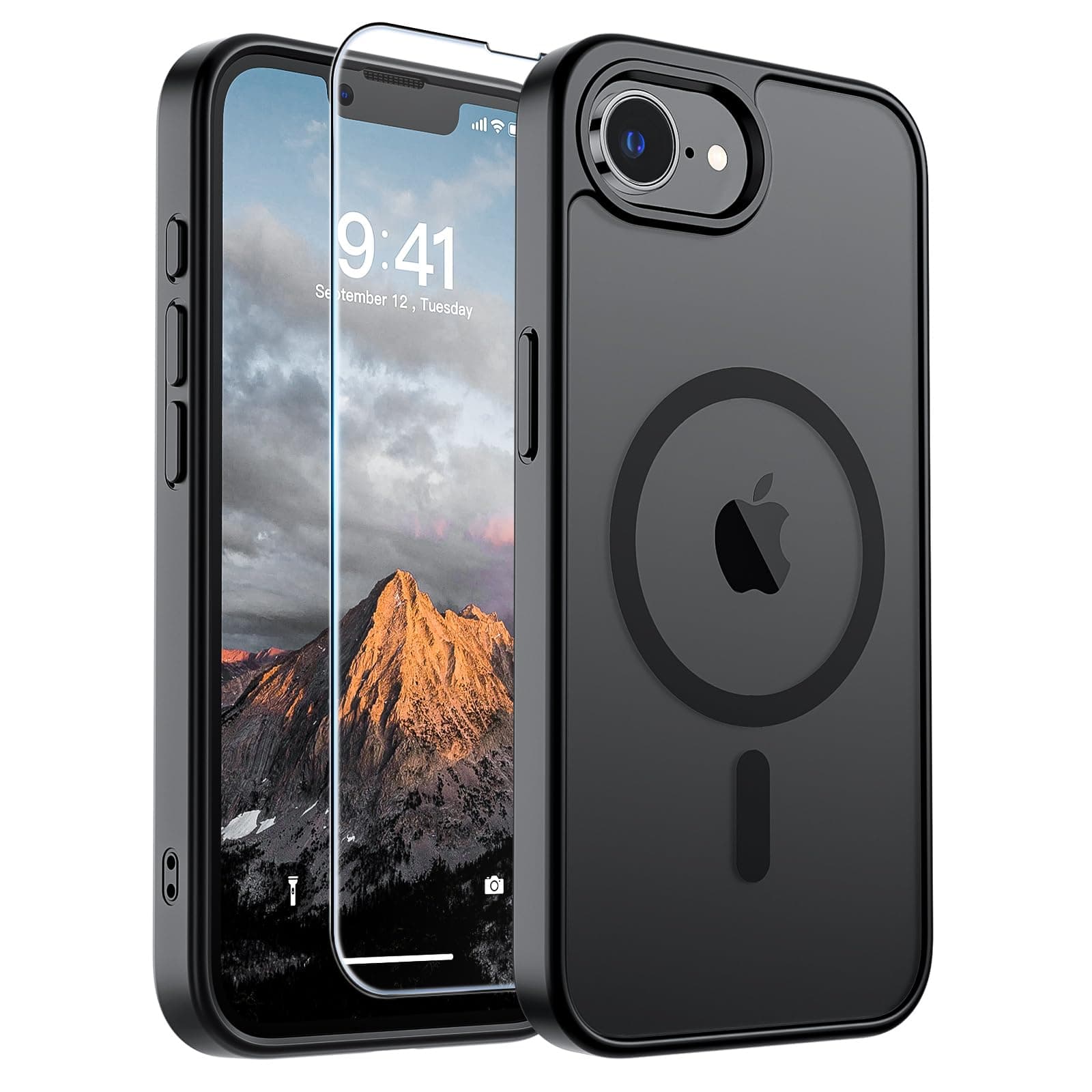 Review
Best iPhone 16e Cases With Built-In MagSafe Magnets
The 16e has no magnets of its own, so the case decides whether wallets, mounts and magnetic chargers work at all. Four picks that carry a real magnet array, from under $7 to just over $30.
Read the review→