Best MagSafe Car Chargers for iPhone
A car mount that doesn't charge is one more cable to plug in every drive. The confusing part is wattage: Qi2 at 15W and generic 7.5W mounts look identical in listings.
·
This post contains Amazon affiliate links. As an Amazon Associate we earn from qualifying purchases, at no extra cost to you.
At a glance
| Pick | Price | Rating | Buy |
|---|---|---|---|
| 2-in-1 15W MagSafe Car Mount ChargerLowest price | $13.99 | 4.3/52,090 reviews | Check price for 2-in-1 15W MagSafe Car Mount Charger on Amazon |
| PISEN MagSafe Car Mount Charger (Qi2, 15W)Highest rated | $29.997% below 90-day avg | 4.6/565 reviews | Check price for PISEN MagSafe Car Mount Charger (Qi2, 15W) on Amazon |
| Belkin MagSafe-Compatible Car Charger (10W)Most reviewed | $59.99 | 4.3/54,219 reviews | Check price for Belkin MagSafe-Compatible Car Charger (10W) on Amazon |
Prices and ratings are the last reading taken from Amazon price history. Check the listing for the current price.
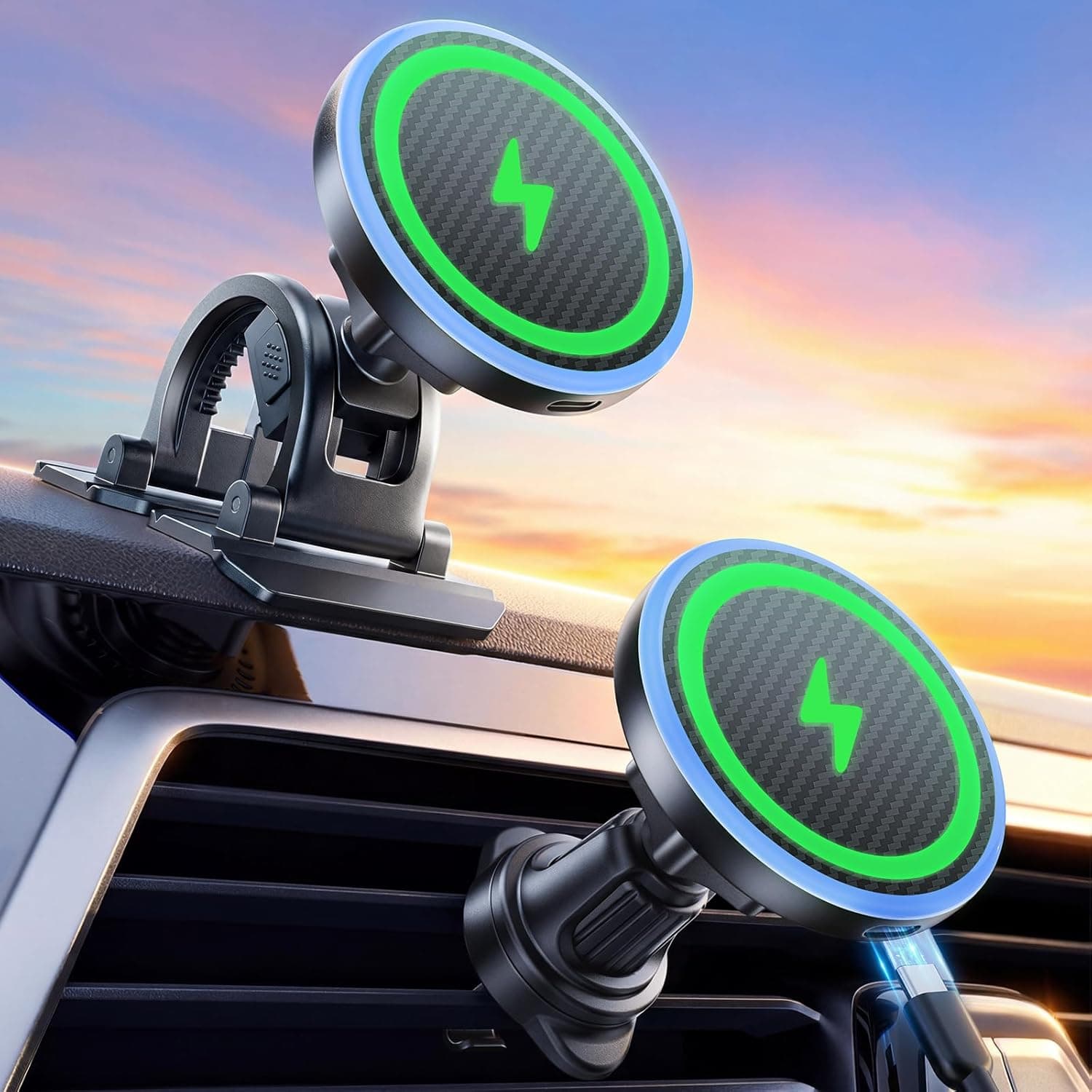
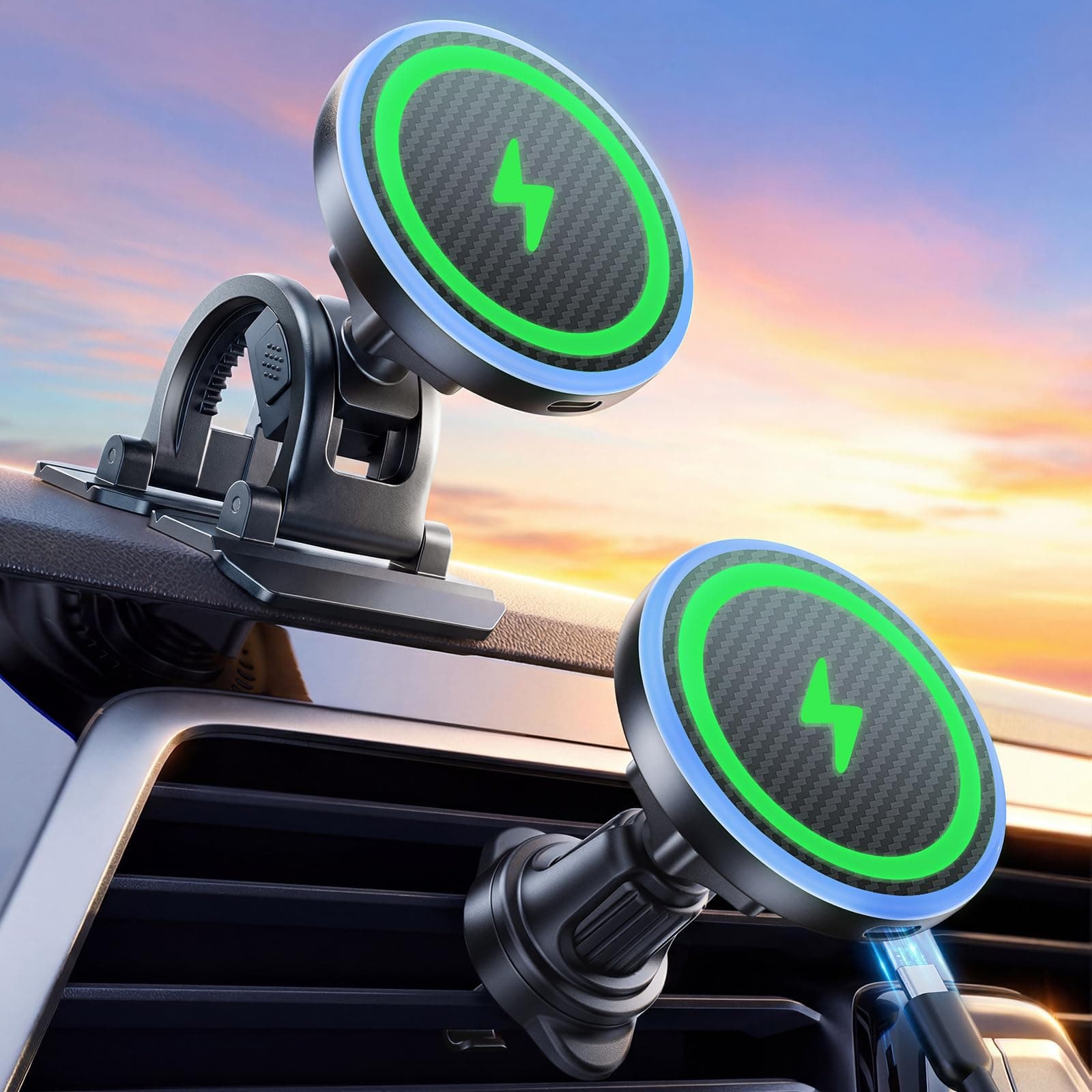
2-in-1 15W MagSafe Car Mount Charger
Very affordable for a charging mount
$13.99 · 4.3/5 · 2,090 reviews
A phone mount that doesn't charge means you are still plugging in a cable every drive, which defeats most of the point of a magnetic mount. A charging mount that grips badly is worse, because it drops your phone into the footwell on a speed bump while you are navigating.
The genuinely confusing part of this category is wattage. Two mounts that look identical in listings can charge at 15W or at 7.5W, and the listing often will not tell you which without reading the fine print.
What we looked for
- Actual charging wattage, not the wattage of the adapter it needs
- Grip strength on rough roads, which depends on the mount arm as much as the magnets
- Mount style matched to where your car has space
- Heat behaviour, since a hot phone on a windscreen in summer throttles charging to nothing
Qi2, MagSafe and "MagSafe compatible" are three different things
This is the single most useful thing to understand before buying.
Apple's MagSafe charges most iPhones at up to 15W, and the iPhone 17 and 18 Pro at up to 25W when paired with a 30W or larger adapter. Qi2 is the open standard that copied it, magnet ring included, and delivers 15W. Both align the charger to the coil magnetically, which is why they hit full speed reliably.
Worth knowing before you shop for the newest phones: almost no car mount on sale today delivers 25W. If you have a 17 or an 18 Pro, 15W remains the practical ceiling in a car, and the phone simply charges at the slower rate.
"MagSafe compatible" means only that the accessory sticks to the magnets. A large share of cheap magnetic car mounts are Qi chargers underneath, not Qi2, and they cap at 7.5W. Attaching magnetically does not make a charger fast. If a listing avoids stating a wattage anywhere, assume 7.5W.
Whether that matters depends entirely on your driving. Over a fifteen-minute errand the difference between 7.5W and 15W is a few percent of battery, and either one beats nothing. On a two-hour drive with navigation and music running, a 7.5W mount can lose ground while a 15W one gains it. Buy for your longest regular drive, not your shortest.
One more trap: almost none of these mounts include the car adapter. A 15W mount plugged into an old 5W USB socket charges at 5W. You need a car adapter that can actually deliver the power, and that is often a separate purchase.
Vent, dash or windscreen
Vent clips are the smallest and put the phone at a natural height, but they block an air vent and put weight on a plastic louvre. On cars with thin vertical vanes they wobble.
Dash mounts on an adhesive pad or a weighted base are the most stable and the least likely to vibrate loose, at the cost of taking up dash space and sitting lower in your eyeline.
Windscreen suction arms give the best sight line and the worst heat. Direct summer sun on a phone that is also charging is the fastest way to trigger thermal throttling, at which point charging stops entirely until the phone cools. If you live somewhere hot, a vent mount that sits in the airflow is genuinely the better engineering choice, because the air conditioning cools the phone while it charges.
Why your phone gets hot and stops charging
Wireless charging is inefficient by nature. Energy that does not make it into the battery becomes heat, on both sides. Add a case, add sunlight through glass, add the phone running navigation with the screen at full brightness, and iOS will protect the battery by cutting charging back or stopping it.
Three things help more than buying a more expensive mount: pointing an air vent at the phone, taking off any MagSafe wallet before mounting since cards trap heat against the coil, and using a thin case rather than a thick one for long drives.
The adapter is half the purchase
Almost every mount in this category ships with a cable and no power adapter, and this is where most disappointing charging speeds come from.
Wireless charging is lossy, so a mount that delivers 15W to the phone needs meaningfully more than 15W coming in. A USB-C Power Delivery car adapter rated at 20W or above is the realistic minimum for a Qi2 mount. Older USB-A car adapters and the USB ports built into many cars deliver far less, sometimes as little as 5W, and they will quietly cap an expensive mount at a trickle.
Two other things worth checking before you buy. Cable length decides where the mount can physically go, and a mount with a short fixed cable can be unusable in a car whose only socket is in the centre console. And if you also run a dashcam or a passenger's phone, buy a two-port adapter up front rather than a splitter later.
Our picks
Three mounts covering three budgets: a cheap 2-in-1 that does the job for short trips, a Qi2-certified mount for anyone who drives long enough for 15W to matter, and the Belkin for people who want a known brand and consistent build over raw speed.
If your phone has no built-in magnets, which includes the iPhone 16e, you will need a case with its own magnet ring first. Both our iPhone 16 case guide and the 17 Pro Max guide flag which picks include one.
For the 16e specifically, does the iPhone 16e have MagSafe covers what works, what does not, and the cheapest way to add attachment back. If a mount you already own keeps letting go, start with why MagSafe accessories fall off.
- +Very affordable for a charging mount
- +360° adjustable
- +Fits dash or air vent
- -Car charging adapter not always included
Price last checked Sep 8, 2026. Amazon changes prices often — the listing is the authority.
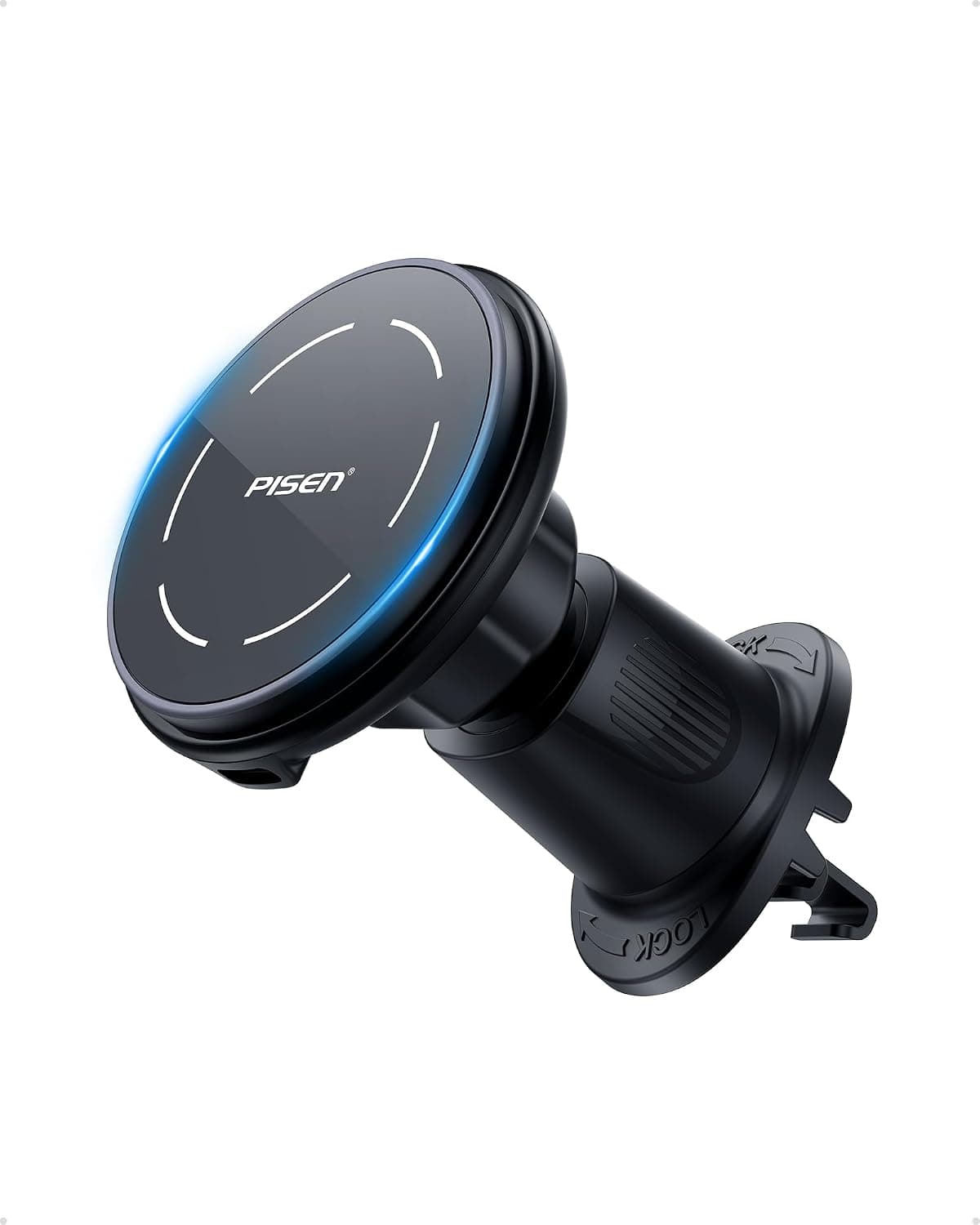
7% below its 90-day average
- +Qi2-certified for consistent 15W output
- +Stable vent clip
- +Established accessory brand
- -Mid-range price for a single mount
Price last checked Sep 8, 2026. Amazon changes prices often — the listing is the authority.
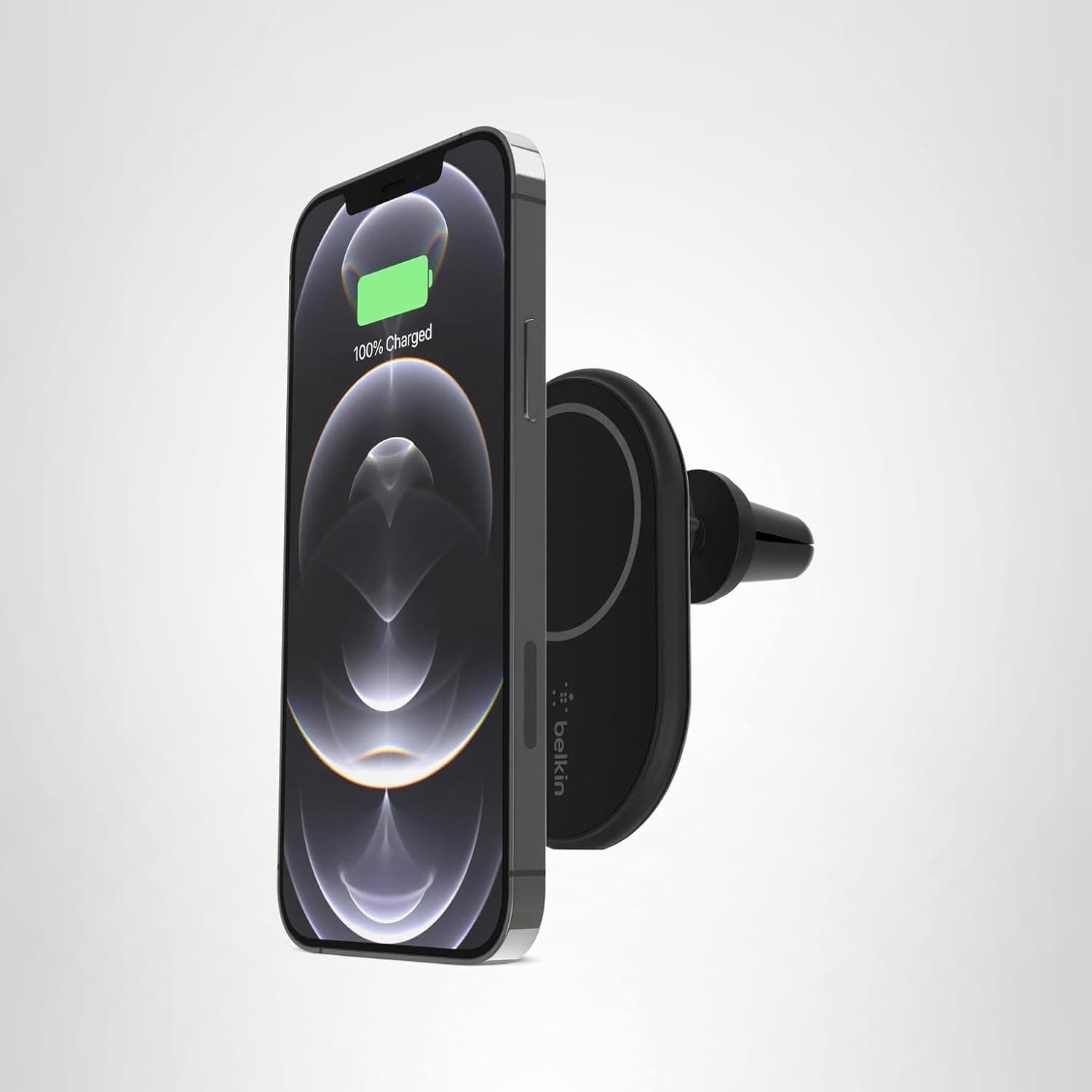
- +Trusted brand with wide compatibility
- +Secure vent grip
- +Consistently built quality
- -Only 10W — slower than newer Qi2 mounts
- -Premium price for the wattage
Price last checked Sep 8, 2026. Amazon changes prices often — the listing is the authority.
Frequently asked questions
Does a MagSafe car charger work through a case? Through a case with its own magnet ring, yes, at full strength. Through a thick case with no magnets it will either hold weakly or not charge reliably, because the coils end up too far apart.
Do I need a special car adapter? Usually yes. Most mounts ship with a cable but no adapter, and a 15W mount plugged into an old low-power socket charges slowly. Check what your car socket or adapter can actually deliver.
Is Qi2 worth paying for over a 7.5W mount? On long drives with navigation running, yes, because 7.5W can lose ground against the load. For short trips the difference is a few percent of battery and not worth double the price.
Why does my phone get hot and stop charging in the car? Wireless charging produces heat, and sunlight through the windscreen adds more. iOS throttles or halts charging to protect the battery. Aim a vent at the phone and remove any card wallet from the back.
Will the iPhone 16e work with a magnetic car mount? Only with a case that has a magnet ring built in. The 16e has no MagSafe magnets of its own, so bare it will not attach.
Do vent mounts damage air vents? On sturdy horizontal vanes they are fine. On thin vertical vanes or delicate trim, a heavy mount plus a large phone can bend or crack them. A dash or cup-holder mount is safer in those cars.
More reviews
Does the iPhone Duo Have MagSafe? Yes, With One Open Question
Apple's foldable has a full magnet array and 25W MagSafe charging. What Apple has not said is which half the magnets sit in, and on a phone that opens, that matters.
Read the review→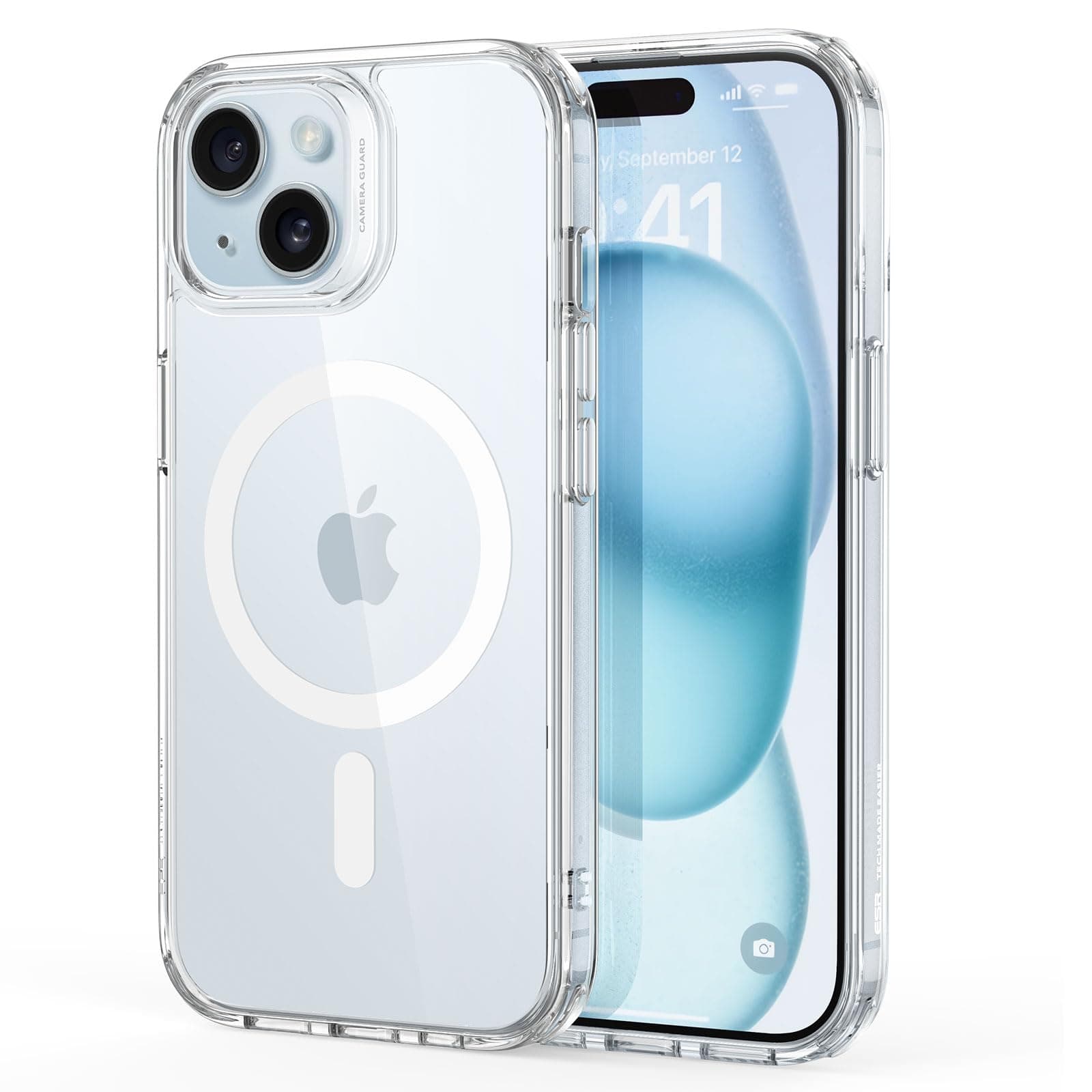 Review
Best iPhone 15 Cases (15, Plus, Pro & Pro Max)
Apple has stopped selling the iPhone 15, which is good news if you still use one: the best cases now have three years of owner reviews and sell well below launch prices. Six picks across all four models.
Read the review→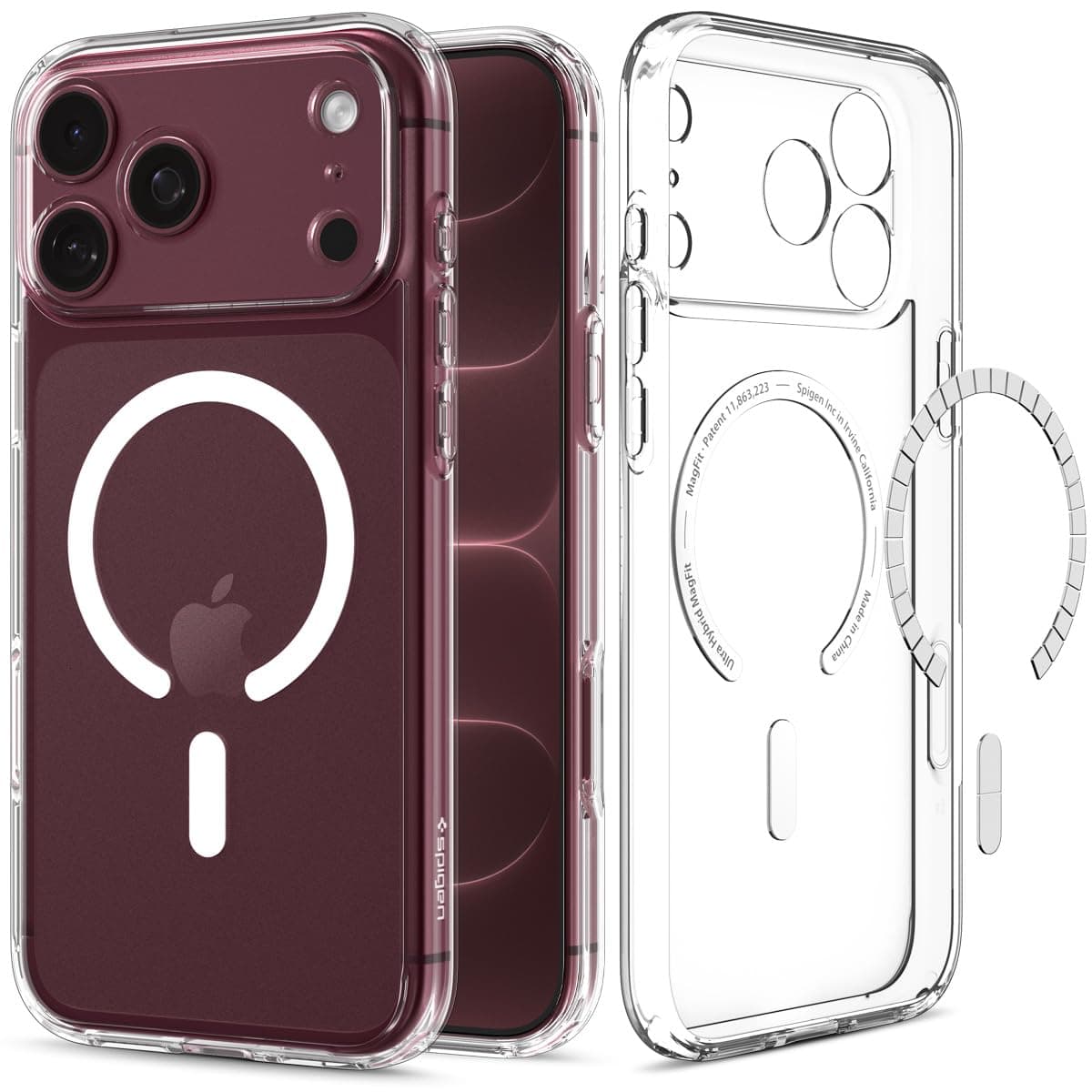 Review
Best iPhone 17 Pro Cases: Clear, Frosted and Rugged Picks
A year after launch, some of the reviews on iPhone 17 Pro cases are finally about the iPhone 17 Pro. Six picks, why Cosmic Orange changes the choice, and what "18 Pro / 17 Pro" on a listing really promises.
Read the review→